This is the area where most Westerners have difficulty. Let's start with Korean cards. The easiest way to identify a Korean card is that it uses a dot as a period, like in English:

Chinese and Japanese uses a round circle as a period, so if you see regular periods, then it's Korean. Korean is also the only one of these three languages to use spaces between the words.
With that out of the way, let's consider Chinese and Japanese. First of all, if you notice that the period is vertically located in the middle, then you have a Chinese card:
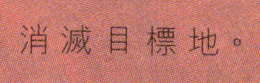
Japanese cards always have the period at the baseline of the text:

For a while, that was all you needed. But starting in 8th edition, some Chinese cards started having the period at the bottom as well. Therefore, I would recommend looking at the type line to be sure if you have a Japanese or Chinese card.
An additional complication is the introduction of simplified Chinese cards for the mainland Chinese market. (Traditional Chinese characters are used in Hong Kong and Taiwan.) Sometimes you can tell these apart by the font, though that can be complicated because the fonts have changed over the years. Take a look at this forum thread for lots of great images. You can also try looking at the fantastic magiccards.info site to find scans of any particular card in many languages.
Back to the main page...